.svg)
%201.jpg?width=1500&height=750&name=image%20(24)%201.jpg)
Many annotation companies quote annotation fees on a "per project" basis, and many people find it difficult to get an idea of the market price. Even so, many people may want to get a broad idea and sense of costs in advance to help them verify quotes.
This article will introduce specific annotation fees and quotes for images, video, audio, and text. Also, the second half of the article will explain how to reduce annotation costs.
If you read to the end, you will be able to get a rough idea of the market price and even learn how to keep annotation costs lower.
|
【Table of Contents】 |
1. Annotation Cost Breakdown
-3.webp?width=1500&height=670&name=image%20(6)-3.webp)
When outsourcing annotation service, the main costs of outsourcing annotation services are as follows:
| 1. Annotation Outsourcing Fees 2. Tool Usage Fees 3. Project Management Fees 4. QA (Quality Assurance) Fees 5. After-Service Fees |
Different companies use different terms in their quotes. There may also be slight overlap in the scope of coverage.
Nevertheless, it should be helpful to have a good understanding of the quotes. Here is a breakdown of each of these.
Annotation Outsourcing Fees
Annotation outsourcing fees are the actual cost of the work involved in creating the teacher data for the development of the AI. It is the main cost of annotation work. They are mainly used to cover the labor costs of the annotators.
The cost of outsourcing annotation varies greatly depending on the type of data being annotated and the quality of the work. Here are some rough estimates for each type of data.
| Types of data | Price |
| Images | From ¥10 / a image |
| Videos | From ¥10 / an object |
| Text | From ¥30 / a sentence |
| Audio | From ¥150 / a minute |
However, outsourcing fees vary greatly depending on the type and method of annotation and the accuracy required.
Taking images as an example, it is common for the price to increase by 2 to 5 times from the object to be annotated in a rectangle to a polygon. This is because the work becomes more complex.
Annotation outsourcing fees are an item where volume discounts are likely to occur. It may be possible to reduce the overall costs by outsourcing large volumes of data in bulk.
Tool Usage Fees
If special tools or software are required for annotation, there will be a charge for their use. This is particularly important for more specialized annotation work.
In some cases this will be included in the total fee, so check when you get a quote.
Project Management Fees
Project management fees are used to manage the project, scheduling and communication of annotators. They are used to ensure that the project is carried out as planned and that quality is maintained.
The amount of work involved in project management costs varies depending on the duration of the annotation work and the level of accuracy required. In most cases, 10-20% of the total fee can be expected to be spent on project management.
QA (Quality Assurance) Fees
QA fees are used to ensure that annotations are accurate and of a high quality. They are mainly used to check that annotations are accurate.
QA costs are largely influenced by the checking regime in place to check and maintain the high quality annotation. Below are the main annotation checking regimes.
| Type of Check | Working Method | Quality Level | Unit Cost |
| Single Review | Annotation and quality control by one person | Low | Low |
| Double Review | Annotation and quality control performed by different people | Medium | Medium |
| Consensus | Annotation is done by multiple people and results are decided by multiple people | High | High |
The higher the quality requirement, the more personnel are needed for these checking regimes, with correspondingly higher QA costs. In particular, areas where accuracy is crucial, such as automated driving and drug discovery, will require high quality checking regimes such as double checking.
For example, so-called consensus is often used in tasks where there is likely to be some variation in the work on the annotation target. This includes classification annotation, which looks at images of people and decides whether they are smiling or not.
After-Service Fees
Some annotation companies offer after-sales services in case any problems arise after the annotation work has been completed. In such cases, customer service fees should also be taken into account.
2. Cost Of Image Annotation
Images are mainly annotated with the following methods:
| ・Image Classification ・Bounding Boxes (Rectangles) ・Polygons ・Segmentation ・Landmarks |
Below is the description of each method of work and the market price.
・Image Classification
Image classification is the process of tagging an entire image. For instance, if the image is of an animal, it can be tagged with its kind and color so that the AI can have an understanding of these attributes. The market price for classification is around ¥5-10 per image.
・Bounding Boxes (Rectangles)
.webp?width=1474&height=980&name=image%20(23).webp)
Bounding boxes are an annotation technique that uses rectangle (square) to mark specific objects in an image.
The unit price of a bounding box is approximately ¥10 per object. However, if a larger number objects are included in a single image, volume discounts may apply, which can result in a lower unit price.
・Polygon
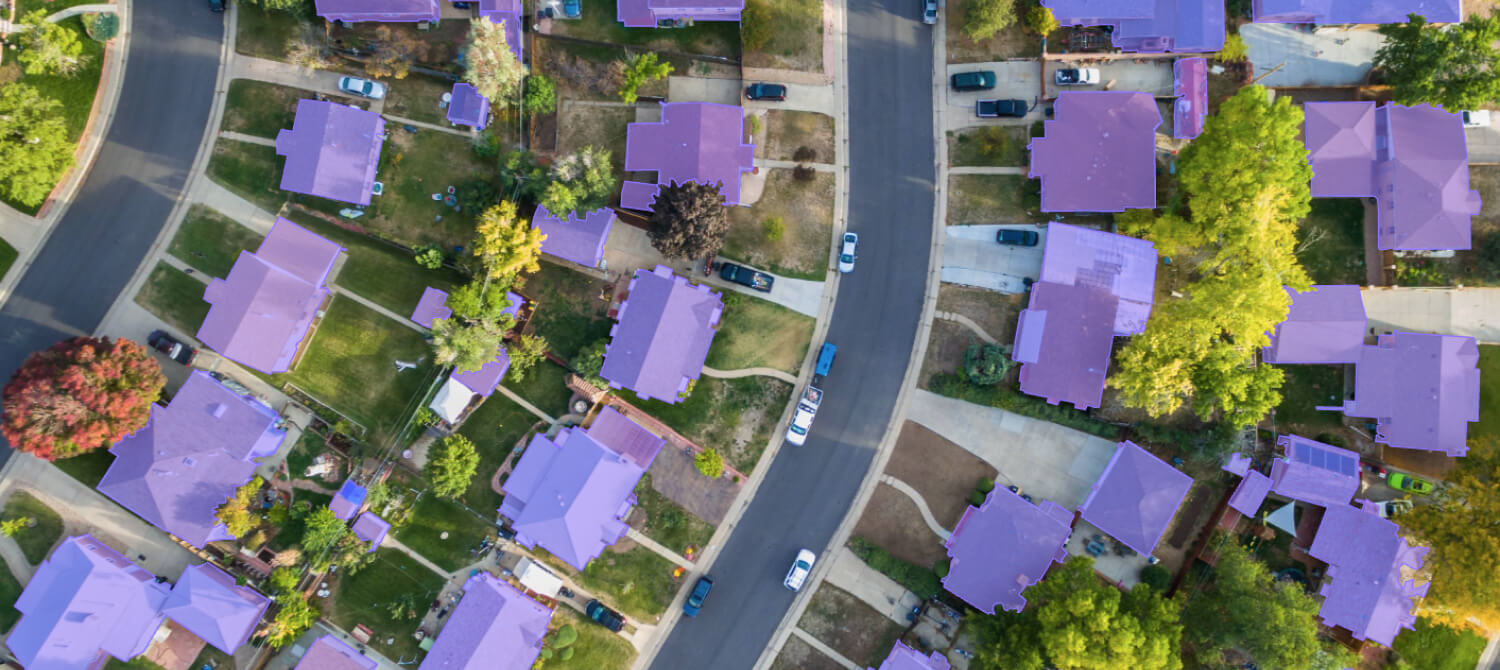
Polygon refers to an annotation technique that uses polygons to mark specific objects in an image. It allows the shape of the objects in an image. It allows the shape of the object to be captured with higher precision than bounding boxes.
The market price for polygons is around ¥20-50 per object. However, this price can vary greatly depending on the required accuracy of the annotation. For example, the unit price tends to be higher as the number of polygon vertices is increased in order to capture the complex shape of the object in more detail.
・Segmentation
-2.webp?width=2144&height=927&name=image%20(15)-2.webp)
Segmentation is a process to annotate an object in an image pixel-by-pixel basis. It is a very detailed technique that follows very sensitive boundary lines. The image above is annotated using the segmentation method to annotate a mountain, a road and trees.
The market price for segmentation is around ¥100-300 per image. However, like polygons, the unit price for segmentation also varies depending on the required accuracy.
In particular, the unit price may increase by several times when annotating images with a large number of objects and complex shapes with high precision. In some cases, the unit price may well exceed ¥1,000.
・Landmarks
-3.webp?width=1401&height=935&name=image%20(17)-3.webp)
Landmark annotation refers to the process of marking key points on specific objects. For example, in facial recognition, marking key locations such as the eyes, nose, and mouth helps to analyze facial shapes and expressions.
Its use is not limited to the face, but is also applied to other parts of the body. For example, tagging the joints of the human body can be used to analyze skeletal movements or to verify athletic forms.
The typical cost for landmark annotation is around ¥5-10 per point.
3. Cost Of Video Annotation
-1.webp?width=1661&height=887&name=image%20(19)-1.webp)
Video annotation requires objects to be annotated frame by frame. Consequently, if the movements in the video are complex or the video is long, the price tends to increase.
The main types of annotation performed on objects within a video include:
| ・Classification ・Bounding Box |
The following is a description of each type of work and its market price.
・Video Classification
Video classification is the process of annotating the entire video. For example, if weather conditions need to be identified, training data for AI to automatically identify weather conditions can be created by marking whether the entire video matches conditions such as "sunny", "rainy", etc.
The unit cost of work for video classification varies greatly depending on the requirements. Simple attribute assignments can start at around ¥20, but for complex videos with numerous classification attributes or for long videos, the cost can exceed ¥1,000.
・Bounding Box
Similar to image annotation, bounding box is a process of tagging objects in a video with rectangles. If the object is moving, the rectangle must move with the movement.
The unit price of a bounding box for a video is usually around ¥20 or more. The price varies depending on the length of the video and the movement of the object.
4. Costs of audio annotation
-Apr-01-2024-09-54-00-6328-AM.webp?width=593&height=318&name=image%20(7)-Apr-01-2024-09-54-00-6328-AM.webp)
Annotating speech data enables the content of the speakers’ conversation, as well as emotions and speaker classification.
To annotate the content of speech data, it is common to first convert the speech into text and then tag sentences or words in the text.
This section describes the methods and costs of converting speech data into text data.
・Filler Word Removal
Filler word removal is the process of removing meaningless words such as "um" and "uh" from audio data. This makes the audio clearer and easier to understand.
The typical cost of filler word removal is around ¥120 per minute of speech, although this may vary depending on the clarity of the audio and the manner in which the speaker is speaking.
・Transcription
Transcription is a way of converting audio data into text data. This allows AI speech recognition systems to obtain data in a readable format.
The typical cost of transcription is approximately ¥250 per minute of audio. This cost can vary depending on the quality of the audio,including the speaker's manner of speaking and speed of speech.
・Text Refinement
Text refinement involves converting spoken language into written language. It corrects certain habits, inverted expressions, etc., and rewrites the text in generally understandable form.
The unit cost of sentences is estimated to be about ¥350 per minute of speech. However, the unit price may be higher if the text required is more complex or specialized.
5. Market Price Of Annotation Costs
-2.webp?width=1124&height=503&name=image%20(8)-2.webp)
Text annotations tag entire texts or specific words within texts.
Annotation of entire texts allows you to determine, for example, whether the text is a question or an affirmative sentence. Annotating words allows more detailed tagging, such as assigning a meaning to each word, as shown in the reference image above.
In the case of the Japanese language, the cost of annotation varies widely depending on the level of accuracy required. Annotating the entire text costs about ¥10 per sentence (about 150 characters), while annotating individual words costs from about ¥30 per sentence.
6. Ways To Keep Annotation Costs Lower
.webp?width=1500&height=670&name=image%20(22).webp)
The main ways to reduce annotation costs include:
| ・Request Only Necessary Work ・Order In Bulk ・Outsource Abroad (Offshore) ・Use Crowdsourcing |
Not all of the above methods are necessarily recommended for all companies. The advantages and potential risks of each of these methods are explained below.
・Request Only Necessary Work
When you request annotation, an ‘annotation commission fee’ will be charged for each task.
Requesting unnecessary annotation work will be an extra cost. It is therefore advisable to request annotation work only for items that are necessary for AI training.
・Order In Bulk
Annotation tasks often involve orders of thousands to tens of thousands of units. Volume discounts may be available for bulk orders. This can reduce overall costs.
Additionally, outsourcing annotations to different companies can result in varying quality. Where possible, try to order annotations from the same company, as variations in quality can lead to inaccuracies.
・Outsource Abroad (Offshore)
It may be possible to reduce annotation costs by outsourcing to countries with lower labor costs.
However, this approach may not be suitable for tasks requiring advanced annotation or Japanese audio and text annotation. Issues with communication and understanding of the Japanese language can lead to incorrect annotations.
・Use Crowdsourcing
One possible way to keep annotation costs low is to use crowdsourcing. However, while the use of crowdsourcing has the potential to reduce costs, it is important to be aware of the risks involved.
First, there are security concerns. Crowdsourced outsourcing increases the risk of information leaks because the work is entrusted to people outside the company. It is best to avoid this, especially when it comes to annotating confidential information.
Secondly, there is the issue of quality. With crowdsourcing, it can be challenging to accurately assess the skills of the workers. If work is outsourced to people with low skill levels, there is a risk of receiving poor quality data.
In these cases, it is important to note that there are often hidden administrative costs associated with quality control.
In rare cases, even annotation companies may ask crowdsourced workers to do the work. Even when requesting annotation from a company, try to check who is doing the annotation.
7. Summary
This article has introduced the costs and market rates for annotation.
In most cases, it will be difficult to say how much the annotation costs in general, as the labor hours and workload can vary greatly depending on the requirements. Therefore, when conjuring outsourcing annotation work, it is a good idea to get quotes from several annotation companies.
It is dangerous, however, to choose an annotation company on the basis of cost alone. The quality of the annotation is directly impacted by the accuracy of the AI system.
Author

Latest Articles