.svg)
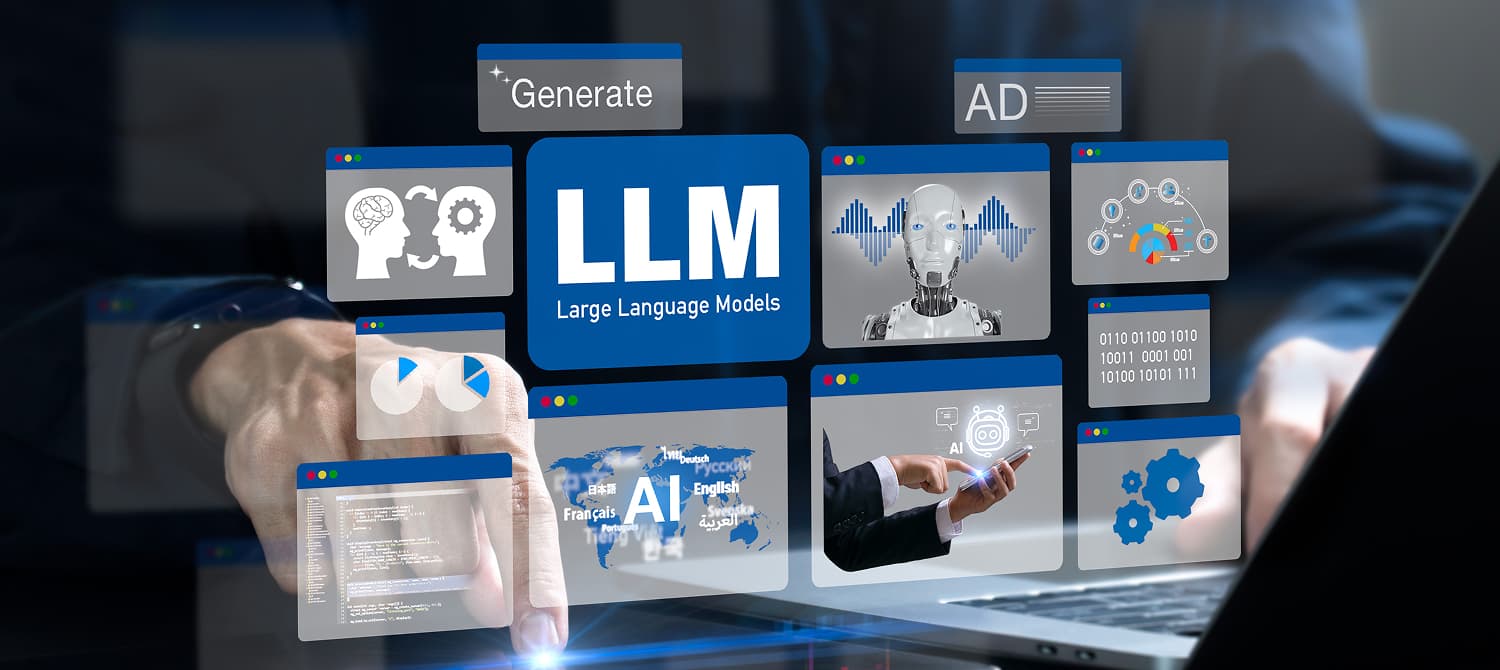
Generative AI, led by ChatGPT, is being adopted by companies at an incredible pace. Among these, the most high-profile technology is the "LLM (Large Language Model)."
With the rapid advancement of LLMs, recent generative AI has begun to be utilized in various directions beyond mere natural language processing, such as image and video generation.
Against this background, many people considering the introduction of LLMs may have questions such as "What types of LLMs are there?" or "How should I introduce them into my company's operations?"
Therefore, this article introduces the basic mechanisms, representative types, and advantages and disadvantages of LLMs. Additionally, through explanations of implementation procedures and use cases, you can gain the practical knowledge necessary for the business application of LLMs.
|
【Table of Contents】 |
1. What is LLM?
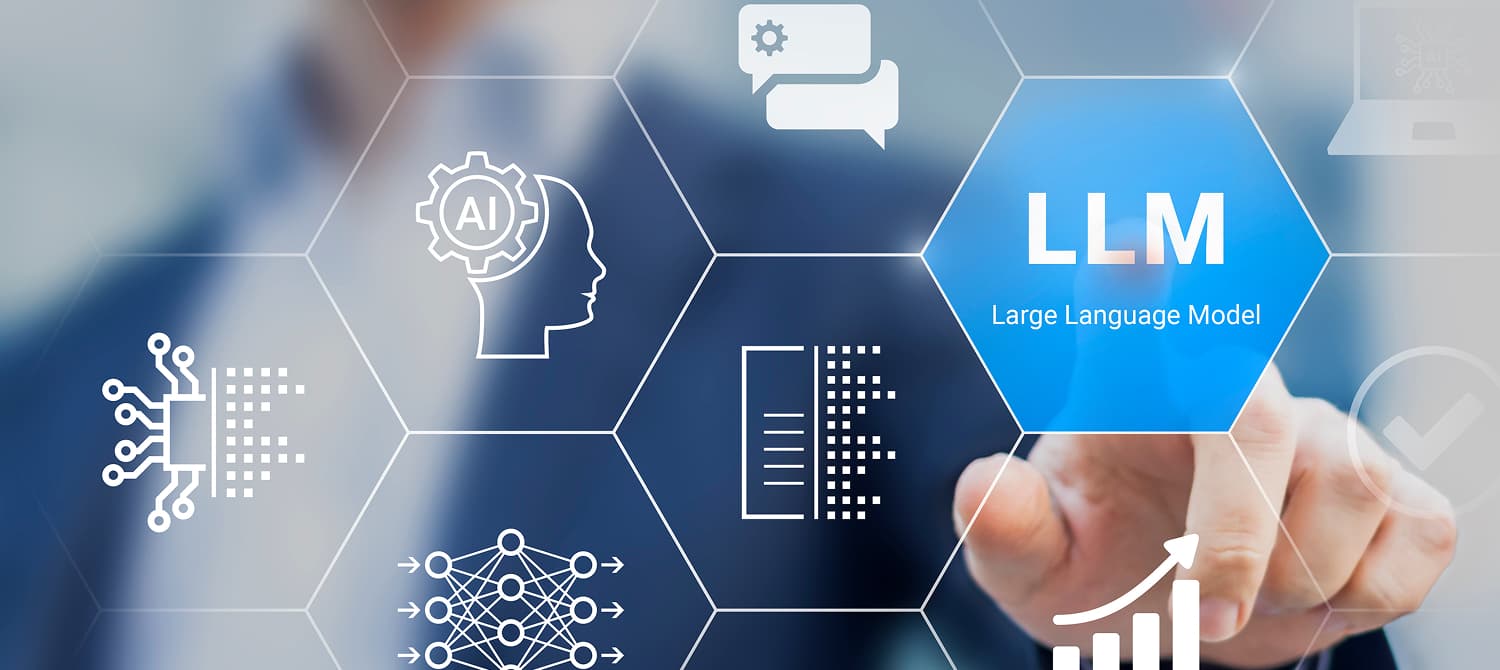
An LLM (Large Language Model) is an AI model trained on massive amounts of text data using deep learning technology, capable of processing and generating natural sentences like a human.
GPT, used in OpenAI's "ChatGPT," and language models like "BERT" and "Gemini" announced by Google are representative examples.
Compared to traditional Natural Language Processing (NLP) models, the following three aspects have changed significantly.
Scale of Training Data:
They are trained using a wide range of text data, from public information on the internet and social media to books and papers.
Number of Parameters:
LLMs have an enormous number of parameters, ranging from billions to hundreds of billions, providing more advanced sentence understanding and generation capabilities.
Processing Mechanism:
While traditional models used simple rule-based or statistical methods, LLMs adopt the Transformer architecture, enabling processing while deeply understanding the context of sentences.
As advanced natural language processing has become possible through the above, LLMs are utilized for a wide range of natural language processing tasks such as text generation, summarization, translation, and question answering.
How LLMs Process Sentences
The mechanism of LLMs is as follows:
(1) Tokenization
Splitting text into the smallest units (tokens) such as "words" and "punctuation."
(2) Vectorization (Embedding)
The process of converting data into numerical values (vectors) to mathematically represent the meaning and relationships of words.
(3) Learning through Neural Networks
Processing data through a multi-layered neural network to extract features, learn word relationships and context, and interpret word meanings and sentence nuances.
(4) Contextual Understanding
Understanding the appropriate meaning and importance of words and sentences, as well as the intent of the entire text, using mechanisms like Attention that grasp the background and context of the text.
(5) Decoding (Text Generation)
Converting the generated numerical data into natural sentences and outputting text by probabilistically predicting the next word based on learned information.
By repeating the above steps, LLMs generate human-like natural sentences.
Main Functions
LLMs possess various functions beyond natural language processing, as follows:
Text Generation:
Generating natural text that looks like it was written by a human, such as for question answering or sentence creation.
Sentence Summarization:
Concisely summarizing long content and extracting key points.
Machine Translation:
Performing text translation between different languages to support communication.
Sentiment Analysis:
Analyzing emotions and sensations contained in text and classifying them into positive/negative/neutral categories.
Code Generation and Analysis:
Generating, debugging, and optimizing programming code.
Multi-task Learning:
Parallel processing of tasks in other fields such as image recognition and speech recognition in addition to natural language processing.
It is noteworthy that recently introduced LLMs can perform multi-task processing like image and speech recognition, not just natural language processing. For example, they can understand images and generate text based on them, or understand context from speech data to generate responses.
Major Types of LLMs
There are many diverse types of LLMs. The following table summarizes the major LLMs.
| Major LLM Types | Developer | Overview |
| GPT | OpenAI | Capable of advanced sentence generation and conversational response, usable in business scenes, content generation, and coding support. |
| Gemini | A multimodal large language model that can simultaneously process multiple types of data such as images, audio, video, and code. | |
| Claude | Anthropic | A model designed with a focus on safety and AI ethics. |
| Llama | Meta | High performance despite being open-source. |
When utilizing the above LLms, it is important to evaluate them based on their respective characteristics and applications. By selecting the appropriate LLM according to your purpose, you can maximize the effectiveness of introduction.
2. Advantages of LLM

We introduce the advantages of LLMs, focusing on comparisons with traditional Natural Language Processing (NLP) technologies.
Contextual Understanding
In traditional NLP technology, the mainstream was to analyze words and phrases individually. In contrast, LLMs have an advanced ability to grasp the entire text while considering the preceding and following context.
Because they can understand natural sentences and generate natural text without feeling out of place, LLMs can be applied to a wider range of tasks compared to traditional NLP technology.
For example, in FAQ systems, they can handle not just simple questions but also questions with complex backgrounds or intentions. Additionally, because LLMs understand natural sentences and can generate text in a seamless way, they are useful in the field of content production.
High Versatility
LLMs can handle a wide range of tasks such as text generation, question answering, and code generation. Therefore, they are not limited to specific uses and can be flexibly utilized in various business scenes.
For example, in the marketing field, they can be used for creating advertising copy and blog articles, or generating ideas for social media posts. Furthermore, through code generation, they can support development work such as creating prototypes for new features, code reviews, and debugging support, which also promises improved productivity at development sites.
High Customizability
As foundational models, LLMs can be adjusted to fit use cases aligned with corporate needs.
For example, by training them on unique corporate FAQ data or industry-specific terminology, more specialized responses become possible. They can also accurately understand technical terms and complex concepts in highly specialized industries like the medical field, responding with expert-level answers.
3. Drawbacks of LLM

While LLMs have many advantages such as high versatility and customizability, several drawbacks that hinder utilization can also be identified. Here, we introduce the drawbacks of LLMs.
High Computational Cost
Compared to traditional NLP, LLMs with enormous parameters require massive computational resources for training, making the introduction of high-performance GPUs and TPUs essential. Since some current LLM models have parameters exceeding hundreds of billions, large-scale parameter learning is required even when re-training or additional training is necessary.
Furthermore, even after training is complete, high-performance servers are required to execute the models efficiently in the operation environment, leading to significant running costs.
Limits to Accuracy of Output Content
It is not uncommon for biases or inaccurate information contained in training data to be reflected directly in LLM responses. For example, responses biased toward specific cultures or genders, incorrect information, or "hallucinations" (unrealistic answers) unique to LLMs may be observed.
To address issues related to LLM output, "preprocessing" to improve the quality of training data is extremely important.
Nextremer provides data collection services to realize high-precision AI models. If you are considering outsourcing data collection even slightly, you can consult for free at any time.
Dependency on Prompt Quality
Current LLMs depend heavily on how user instructions (prompts) are written. Because LLMs generate responses based on prompts, output results can change significantly depending on the expression and structure, and even the same question can yield different responses if the phrasing is changed.
Therefore, to obtain high-quality results as intended, education regarding how to create prompts on the user side may be required.
4. Process of Introducing LLM in Enterprises

We introduce the process of introducing LLM in an enterprise.
Selection of Appropriate Foundational Model (LLM)
When a company introduces an LLM, the first critical step is the selection of the appropriate foundational model. Since each has different characteristics, you must carefully evaluate which model is best for your company's needs.
When selecting, it is good to particularly consider the following three points:
|
Data Collection through Preprocessing
While LLMs (Large Language Models) are pre-trained, to adapt them to specific operations or use cases, a mechanism is needed to collect additional data and generate responses using a technology called RAG. This data preprocessing is an important process directly linked to response accuracy and performance.
The data processing steps generally required are as follows:
| Data Processing Step | Overview |
| Data Cleaning |
|
| Text Annotation |
|
Among the above preprocessing, if especially important annotation can be performed accurately and with high quality, the risk of hallucinations can be suppressed and results suitable for the task can be obtained.
For details on text annotation, please see the article below.
Testing and Tuning
When introducing an LLM, in test operations, to evaluate model accuracy, actual data is input into the LLM and output content is confirmed from the following perspectives:
Accuracy of Output:
Whether intended responses are obtained, and whether misinformation or bias is included.
Consistency:
Whether different results are output for the same question.
Response Speed:
Whether output is obtained at a speed that poses no problem for business operations.
Based on the above items, performance is closely checked to see if it is suitable for practical use.
Next, model parameters and settings are adjusted based on the results of test operations. Note that testing and tuning are not things completed once, but are important to perform continuously.
Improvement
Even after the introduction of an LLM, continuous improvement using user feedback obtained during operation is indispensable.
To do this, user feedback must first be collected. To gather feedback efficiently, it is also effective to build an "automated feedback loop" where users can evaluate "satisfaction."
Then, the model is improved based on the collected feedback.
5. LLM Use Cases

In recent years, the number of companies utilizing LLMs for streamlining inquiry operations or producing web content has been increasing. Here, we introduce LLM use cases.
Streamlining Inquiry Response (Hiroshima Bank)
At the Hiroshima Bank counters, it was necessary to solve problems quickly in front of customers, and it was common to confirm directly with headquarters by telephone. However, a lot of time was taken up at headquarters with phone response, cutting into the time allocated for primary duties.
Therefore, they introduced a combination of Allganize Japan's "related document presentation function" and "AI chatbot" utilizing generative AI and LLMs.
As a result, phone inquiries with simple content were eliminated, and in the Sales Planning Department, the average daily number of phone calls per person was reduced from 40-50 before release to 20-30.
Automatic Content Generation (Astec Paint)
Astec Paint Co., Ltd. has introduced User Local's "ChatAI" for the script structure of its internally managed YouTube channel. They utilize LLM in the following steps of video production created by employees:
- Support for planning and structure creation
- Idea generation for scripts
- Checking the flow of talk themes
As a result, they succeeded in bringing everything from planning/structure to filming and editing in-house, streamlining content production as a whole.
6. Summary
An LLM is an AI model that realizes advanced natural language processing by learning from massive amounts of data. It excels in contextual understanding, generation capabilities, and versatility, and is applied to a wide range of tasks including content generation and customer support.
On the other hand, to effectively introduce an LLM in a company, preprocessing such as data collection, cleaning, and text annotation is indispensable. Sufficient resources must be allocated from the introduction planning stage. However, if securing resources is difficult, the utilization of external specialized companies is recommended.
By utilizing high-quality annotated data as LLM training data and building a high-precision LLM utilization system, aim for improved operational efficiency across the entire organization.
Author

Latest Articles